



For years, uniforms were primarily viewed as a practical necessity. They identified employees, created consistency, and helped maintain a professional appearance.
Today, the conversation is changing.
Organizations are placing greater emphasis on employee experience, brand perception, recruiting, and retention. As a result, uniforms are evolving from a functional requirement into a more strategic part of the overall brand experience.
The most forward-thinking companies are approaching uniforms differently, focusing not only on how they look, but also on how they perform, adapt, and reinforce the brand. Here are six trends shaping modern uniform programs in 2026 and beyond.
1. Performance Comfort
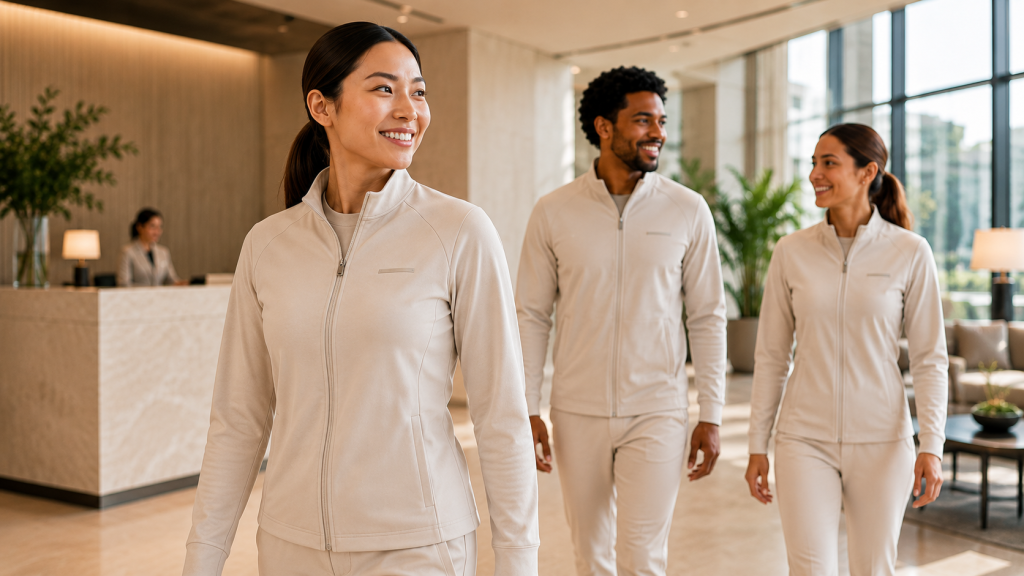
Employees no longer want to choose between looking professional and feeling comfortable.
Features once associated primarily with athletic apparel, including stretch fabrics, moisture management, and lightweight construction, are becoming common across uniform programs. Hospitality, retail, transportation, healthcare, and corporate environments are all embracing apparel designed to support employees throughout the workday.
Comfort is no longer a nice-to-have. It has become an expectation.
When employees feel comfortable in what they wear, organizations often see higher satisfaction, better compliance with uniform standards, and a more positive employee experience.
2. Elevated Minimalism
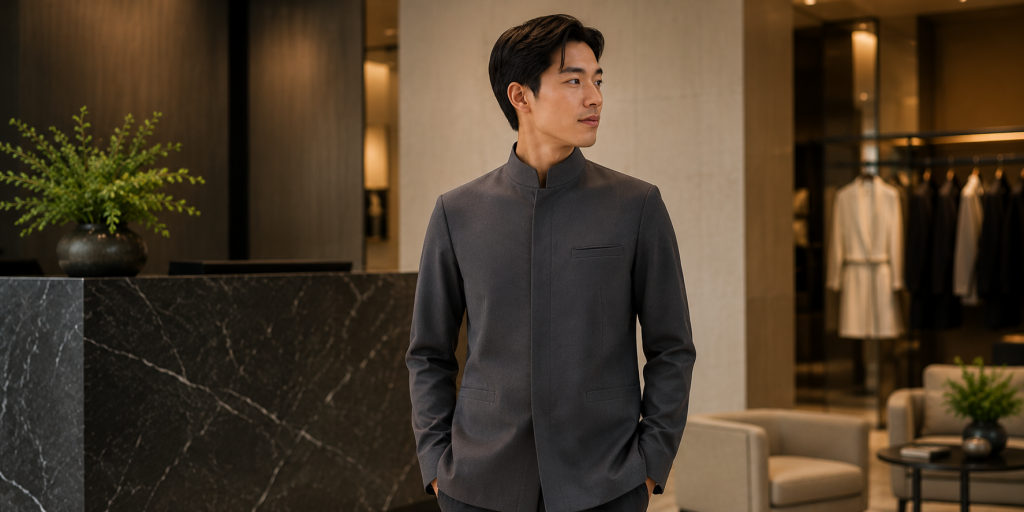
The era of oversized logos and heavily branded apparel is giving way to a more refined approach.
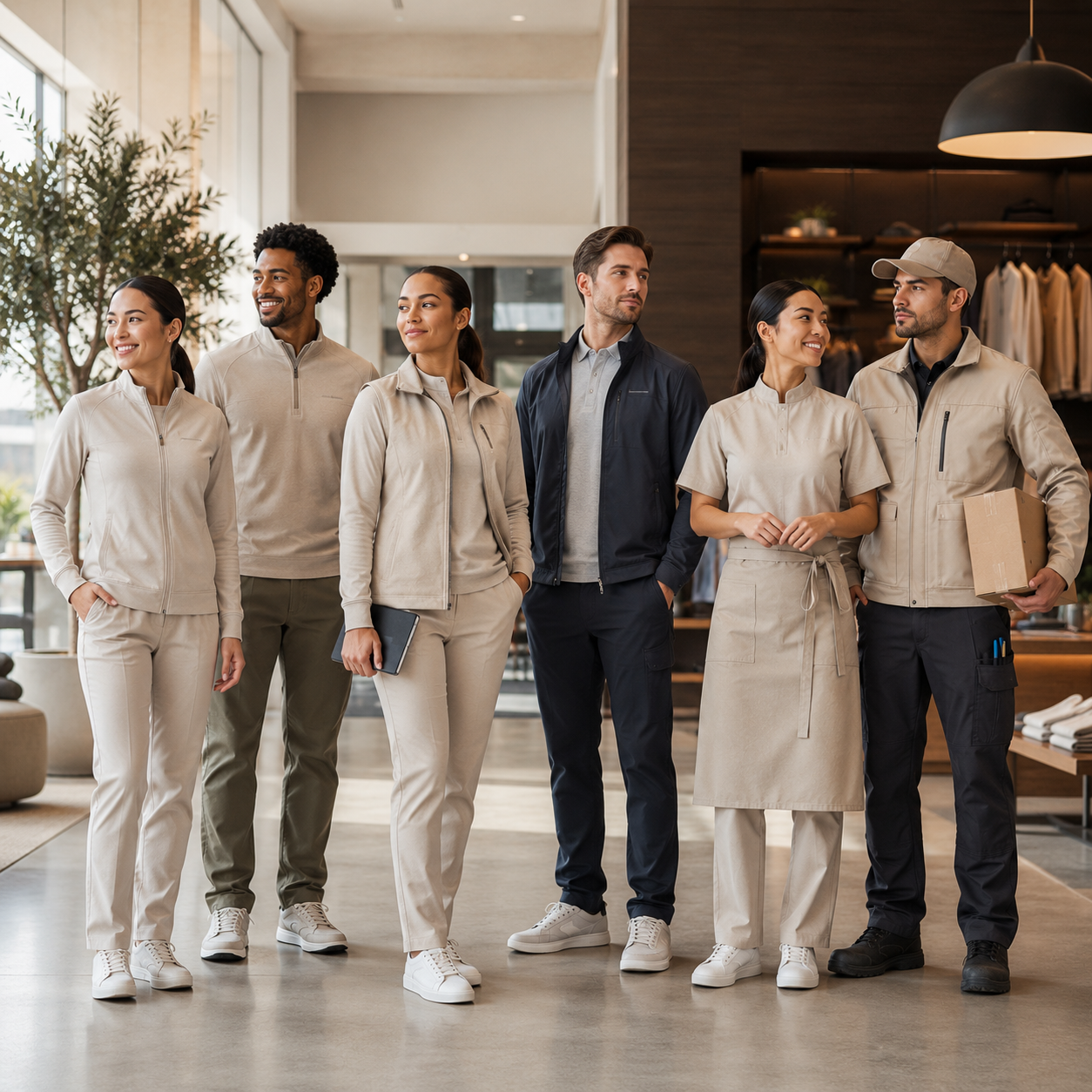
Many organizations are adopting neutral color palettes, subtle branding, and cleaner silhouettes that feel more contemporary and versatile. The goal is not to make the brand less visible, but to make it feel more intentional.
This approach allows uniforms to look polished and professional while creating a stronger sense of quality. It also aligns with the preferences of many younger employees who value modern design and apparel they would feel comfortable wearing beyond the workplace.
In many industries, less is becoming more.
3. Modular Layering
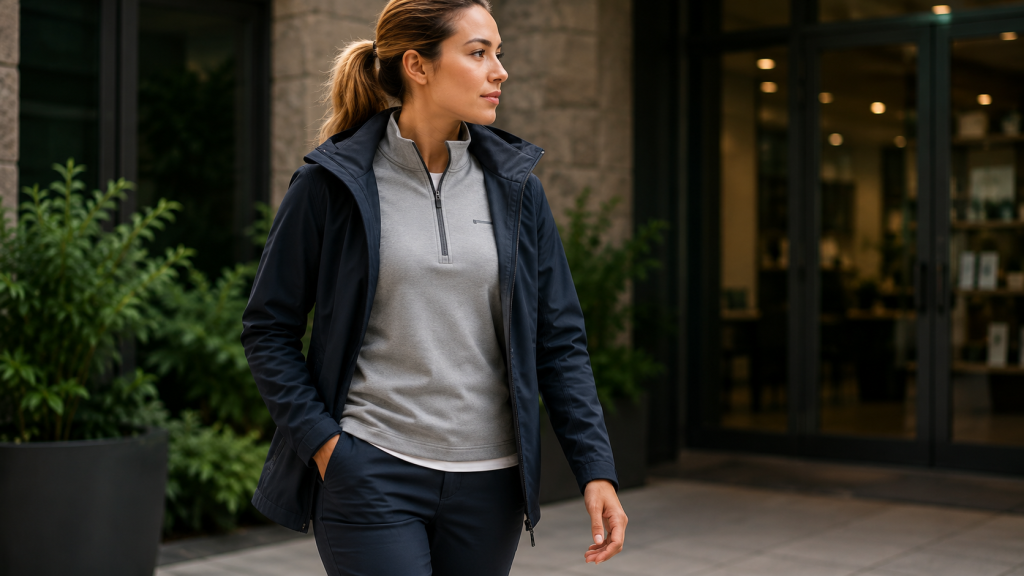
One uniform is no longer expected to serve every employee, climate, shift, and role.
Instead, organizations are building coordinated collections that allow employees to layer pieces based on their environment and responsibilities. A base layer, overshirt, outerwear option, and accessories can create flexibility without sacrificing consistency.
This approach provides practical benefits for both employees and employers.
Employees gain options that help them stay comfortable throughout the day, while organizations can often simplify inventory management and extend the lifespan of their uniform programs.
The result is a system designed to adapt rather than a single garment expected to do everything.
4. Functional Utility

Modern uniform design increasingly starts with a simple question: How do employees actually work?
Designers are incorporating features such as strategically placed pockets, reinforced construction, secure storage, and purpose-built details that support daily tasks. Functionality is no longer hidden. It has become part of the design language itself.
This trend reflects a broader shift toward apparel that serves a purpose beyond appearance.
When uniforms are designed around real-world workflows, employees spend less time working around their clothing and more time focusing on their jobs.
5. Material Transparency and Responsible Sourcing
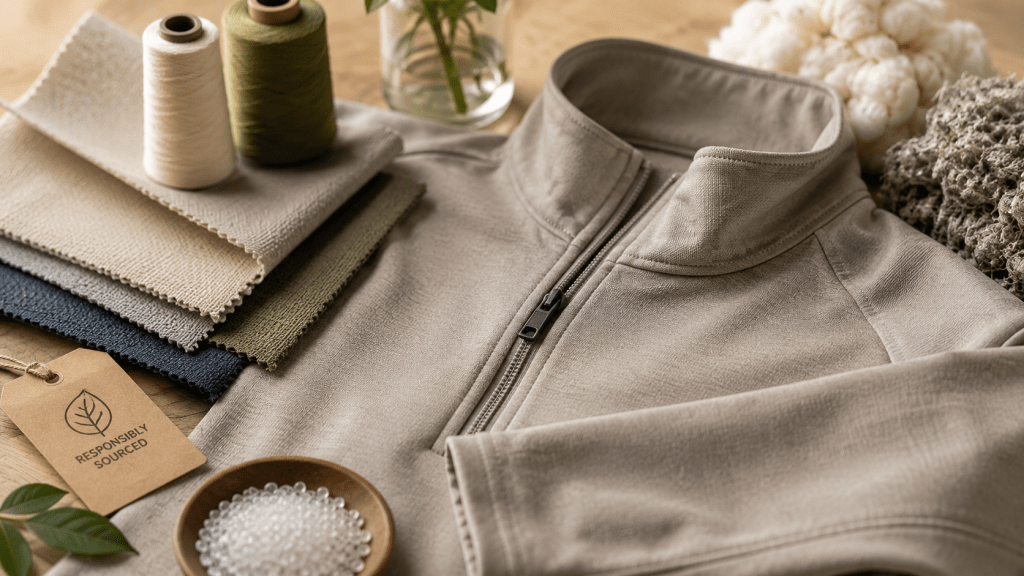
What was once considered a differentiator is increasingly becoming a procurement requirement.
Organizations are asking more questions about where products come from, how materials are sourced, and what documentation is available to support supplier claims. Recycled materials, traceable supply chains, and third-party certifications are becoming more common considerations during the purchasing process.
For many buyers, the conversation is less about checking a box and more about understanding the products they are bringing into their organization.
As procurement teams continue to evaluate supplier partners more closely, transparency is becoming just as important as the finished product itself.
6. Brand Storytelling
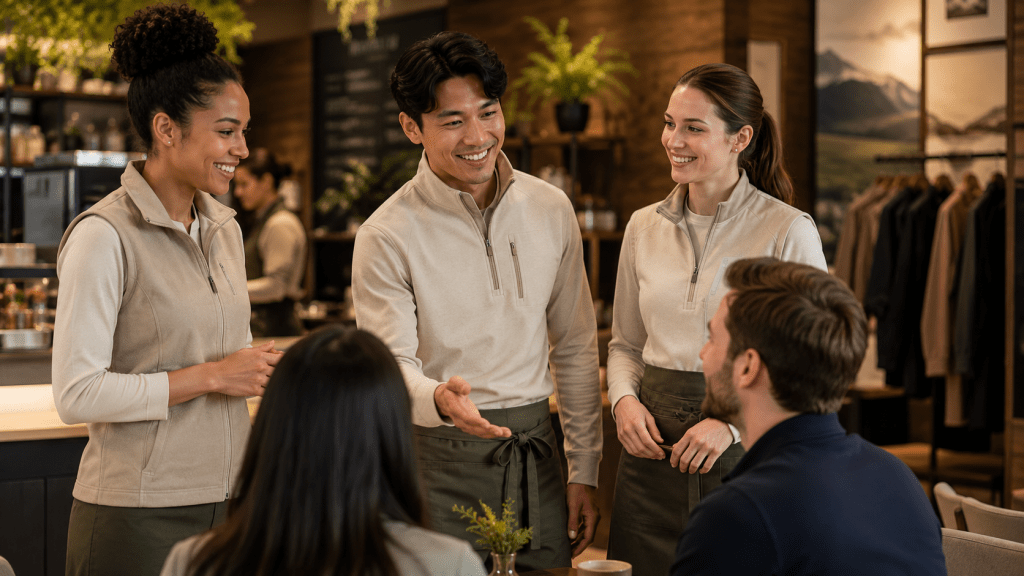
Perhaps the biggest shift is how organizations think about the role uniforms play within the broader brand experience.
Leading companies increasingly view uniforms as an extension of their culture, values, and identity. A well-designed uniform program can reinforce brand standards, support recruiting efforts, strengthen employee pride, and create a more consistent experience across every customer touchpoint.
In some cases, uniform launches are even being approached similarly to product launches, complete with employee communications, lookbooks, and internal campaigns.
The uniform is no longer simply what employees wear. It has become another way organizations tell their story.
The Bigger Picture
The most effective uniform programs today are built around more than appearance.
They balance comfort with professionalism. Function with flexibility. Brand consistency with employee experience.
As organizations continue to invest in creating stronger connections with employees and customers, uniforms are becoming an increasingly important part of the conversation.
Because in today’s workplace, what employees wear is often one of the most visible expressions of a brand.
Insights in this article were informed by HALO’s 2026 Uniform Trends Report and ongoing conversations with clients across retail, hospitality, healthcare, transportation, and corporate environments.
Want a deeper look at what’s shaping uniform programs in 2026?
Contact us to request our Uniform Trends Report and explore ideas for your organization.